Braces for Kids and Teens in Pomona, CA
Free consultation with a smile simulation. Braces starting from $3,000. 0% in-house payment plans available.
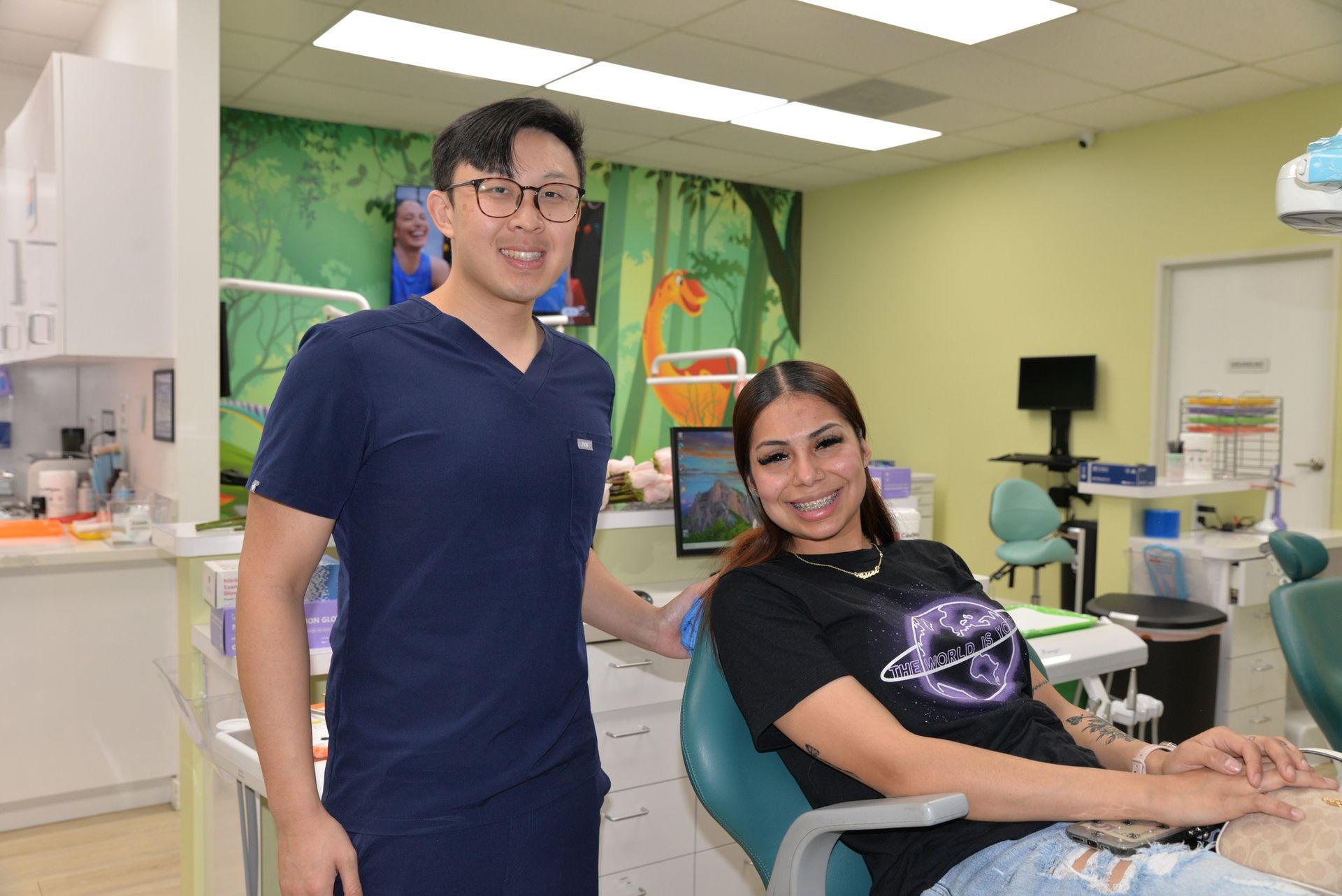
At Kids Dental Castle & Orthodontics, Dr. Lyndon Tran provides braces for children and teens in Pomona and nearby communities. Your free orthodontic consultation is an opportunity to discuss your child's teeth and bite, treatment options and expected costs.
When Does My Child Need Braces?
Braces may be recommended when a child or teen has crowded or crooked teeth, gaps between teeth, or problems with the way the upper and lower teeth fit together. Orthodontic treatment can also help guide developing teeth into healthier positions and improve both function and appearance.
Signs your child may benefit from an orthodontic evaluation include:
• Crowded, crooked, or overlapping teeth
• Gaps or excessive spacing between teeth
• Overbite, underbite, or crossbite
• Teeth that protrude noticeably
• Difficulty biting or chewing comfortably
• Early or late loss of baby teeth
• Jaw or bite alignment concerns
Types of Braces We Offer
Traditional Metal Braces
Modern metal braces are smaller and more comfortable than braces of the past. They provide reliable, precise tooth movement and are an excellent option for children and teens.
Clear Braces
For patients looking for a less noticeable option, clear or tooth-colored brackets can provide effective orthodontic treatment with a more discreet appearance.
Looking for an alternative to braces?
Some patients may also be candidates for Invisalign® clear aligners. During an orthodontic consultation, we can help determine which treatment option is most appropriate.
How Do Braces Work?
Braces use brackets, archwires, and gentle, controlled pressure to gradually move teeth into healthier positions. During treatment, periodic orthodontic appointments allow us to make adjustments and monitor your child's progress.
Treatment time varies depending on the complexity of the bite and tooth alignment, as well as how the teeth respond to treatment.
What to Expect During Treatment
After braces are placed, it is normal to experience some temporary pressure or tenderness as the teeth begin to move. Most patients adjust quickly.
Regular orthodontic visits are important throughout treatment. At these appointments, we evaluate progress, make necessary adjustments, and make sure the teeth and bite are moving as planned. Good brushing, flossing, and following orthodontic instructions can help keep treatment progressing smoothly.
Caring for Braces / Foods to Avoid
Keeping your teeth and braces clean is especially important during orthodontic treatment. Patients should brush carefully around brackets and wires and follow the orthodontic team's instructions for flossing and oral hygiene.
To reduce the risk of broken brackets or wires, avoid very hard, sticky, or chewy foods such as ice, hard candy, gum, and chewy caramel. Foods such as apples and carrots can still be enjoyed when cut into smaller pieces.
Retainers help maintain tooth alignment after braces. Initial retainers are included in treatment, and we provide adjustments or repairs at no charge when needed. Replacing a lost retainer costs extra. Your orthodontist will explain the recommended wearing schedule.
Meet Dr. Lyndon Tran, Board-Certified Orthodontist
Dr. Lyndon Tran is a board-certified orthodontist who completed his orthodontic residency at New York University. At Kids Dental Castle & Orthodontics, he provides orthodontic care for children, teens and adults. During your consultation, you can discuss treatment options and the expected timing and cost for your individual needs. Learn more about Dr. Tran and our dental team.
Para Familias de Pomona
Se habla español. Los brackets completos cuestan $3,500 — $300 de enganche y aproximadamente $133 al mes por 24 meses, sin interés y sin financiera externa. Medi-Cal Dental cubre brackets cuando el caso es médicamente necesario; nosotros preparamos y enviamos la autorización. La consulta, el examen y las radiografías son gratis.
What age should my child be evaluated for braces?
The American Association of Orthodontists recommends that children have their first orthodontic evaluation by age 7. This does not mean braces will necessarily begin at that age. An early evaluation allows developing bite, jaw, and tooth alignment concerns to be identified and monitored.
How long will my child need braces?
Treatment time depends on your child's individual orthodontic needs and how treatment progresses. Dr. Tran can discuss the expected timeline after evaluating your child's teeth and bite. Your orthodontic team will monitor progress and explain any changes to the treatment plan.
Do braces hurt?
Braces should not cause significant ongoing pain. Some pressure or tenderness is common for a few days after braces are first placed or following certain adjustments. This typically improves as the teeth and mouth adjust.
How often are appointments during braces treatment?
Orthodontic adjustment appointments are typically scheduled every several weeks. The exact schedule depends on your child's treatment plan and progress.
Can my child still play sports with braces?
Yes. Children and teens with braces can continue participating in sports. A properly fitted orthodontic mouthguard may be recommended for contact or higher-risk activities to help protect the teeth, lips, cheeks, and braces.
Are Invisalign® clear aligners an alternative to braces?
For some patients, yes. Invisalign clear aligners can be an alternative to braces, depending on the orthodontic concerns and individual treatment needs. During the consultation, we can discuss whether braces or clear aligners are appropriate for your child.
How much does it cost to start braces?
Braces start from $3,000, with comprehensive braces treatment approximately $3,500. For comprehensive treatment, our 0% in-house payment example is $300 down followed by approximately $133 per month for 24 months. Monthly examples are rounded, with the final installment adjusted to match the agreed total. Initial retainers are included. If an additional appliance is needed, we explain its extra cost beforehand. Extractions, if needed, are billed to insurance; coverage and any patient responsibility depend on the plan. We also accept CareCredit, which may allow $0 down subject to credit approval, sufficient available credit and applicable terms. CareCredit is separate from our 0% in-house payment plans.
Do I need dental insurance to get braces?
No. You may request an orthodontic consultation without dental insurance. We accept Medi-Cal and PPO plans, but orthodontic benefits vary by plan. Our team can review your coverage and discuss available payment options before treatment begins. We do not accept HMO plans.
Does Medi-Cal cover braces?
Yes, when the case meets Medi-Cal Dental's medical-necessity criteria. We take the records and submit the authorization for you at the free consultation. Medi-Cal covers braces, not Invisalign.
Is the orthodontic consultation free?
Yes. Your free consultation includes an examination, digital panoramic and cephalometric X-rays, an iTero 3D scan and a smile simulation. We explain treatment options and costs before you decide how to proceed. The simulation illustrates potential changes; it is not a guarantee of the final result.
How much is Phase One (early) treatment?
Phase One treatment is about $3,000. Our 0% in-house payment example is $300 down and approximately $150 per month for 18 months. We review the exact fee and payment schedule for your child's treatment plan before treatment begins.
Is there a discount for paying in full?
Yes. We offer 5% off your agreed braces treatment fee when you pay in full with cash or a personal credit card. For a $3,500 treatment plan, the discounted amount is $3,325. CareCredit payments do not qualify for this discount.
¿Hablan español?
Sí. Se habla español en nuestra oficina, y la consulta es gratis.
Ready to Start Your Child's Smile Journey?
Schedule an orthodontic consultation at Kids Dental Castle & Orthodontics in Pomona. We'll evaluate your child's teeth and bite, discuss treatment options, and help determine whether braces or another orthodontic treatment is the right choice.