Orthodontist & Invisalign Near San Dimas, CA
If you live in San Dimas and someone has told you or your child may need braces, Invisalign, or early orthodontic treatment, it’s reasonable to want a clear explanation before committing.
Sometimes treatment should start.
Sometimes it can wait.
And sometimes there’s more than one good way to handle the same orthodontic problem.
At Kids Dental Castle & Orthodontics, the first visit is about figuring out what’s actually going on with the teeth and bite and then talking through the options.
Do I Actually Need Orthodontic Treatment?
Not every crowded tooth needs immediate treatment.
Not every child needs Phase One orthodontics.
And not every adult who wants straighter teeth needs the same kind of treatment.
Before recommending anything, we look at:
- How the upper and lower teeth fit together
- Crowding and spacing
- Tooth eruption
- Jaw relationships
- Age and growth
- Gum and dental health
- Which teeth actually need to move
Then we talk about whether treatment makes sense now, later, or at all.
That sounds obvious, but it matters.
The goal isn’t to find a reason to put everyone into braces. It’s to decide whether there’s a problem worth treating.
Already Got an Orthodontic Recommendation Somewhere Else?
Second opinions are completely reasonable.
Orthodontic treatment can take months or years and costs real money. If another office has already recommended braces, Invisalign, Phase One treatment, or an appliance and you’re not sure about it, we can take another look.
We may agree with the recommendation.
We may suggest a different approach.
Or we may tell you that waiting is reasonable.
You don’t have to transfer treatment or commit to anything just because you asked for another opinion.
Meet Dr. Lyndon Tran
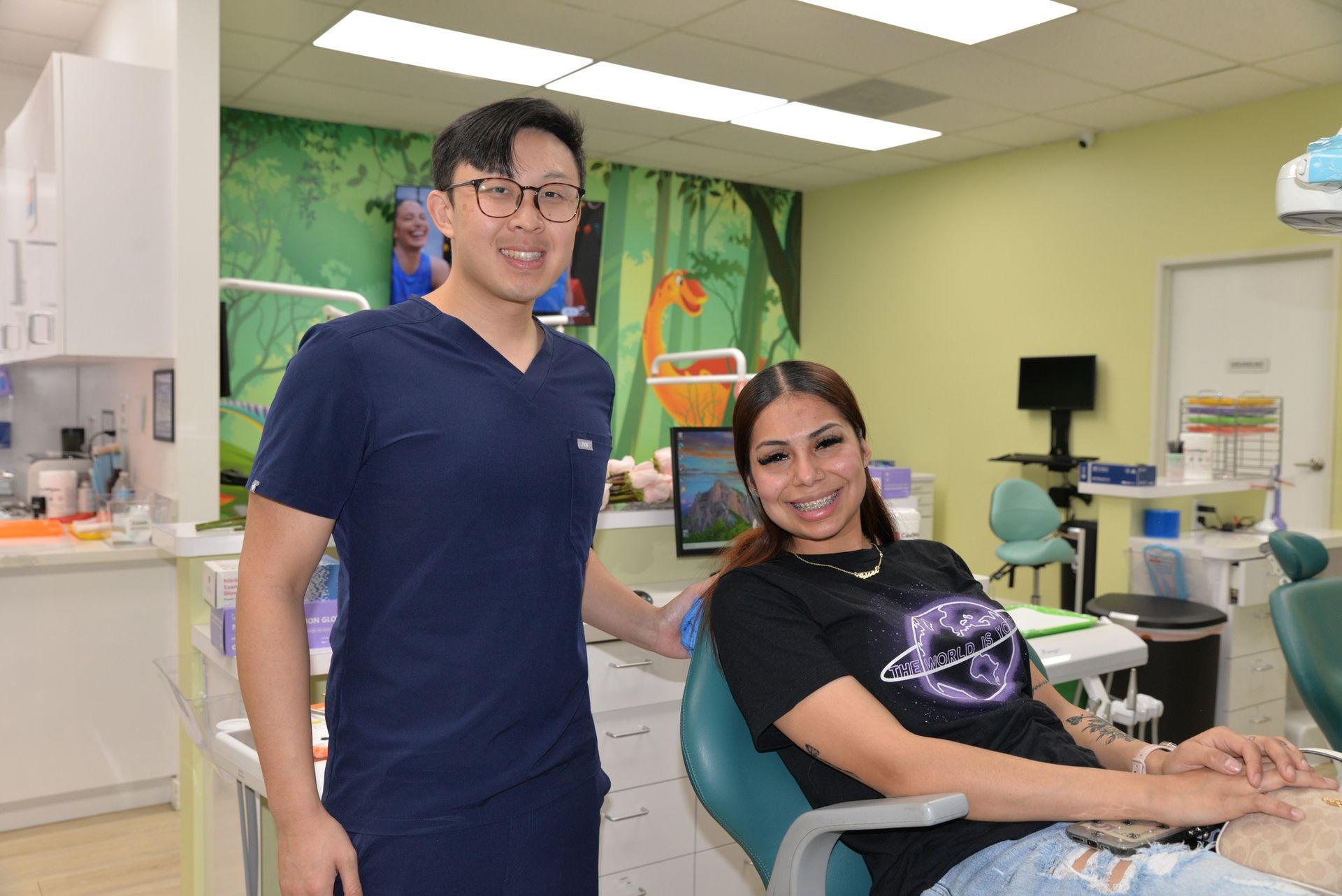
Orthodontic care at Kids Dental Castle & Orthodontics is led by Dr. Lyndon Tran, a board-certified orthodontist who treats children, teens, and adults.
Dr. Tran completed dental school at New York University and was the top student in his orthodontic honors program. He later completed his orthodontic residency at NYU and became certified by the American Board of Orthodontics.
His job at the consultation isn’t simply to tell you which appliance he prefers.
It’s to look at the bite, explain what needs to change, and help you understand the different ways it can be treated.
When Is Waiting Better Than Starting?
Parents often worry that waiting will make things worse.
Sometimes it can.
But sometimes waiting actually gives us a better time to treat.
A younger child may not have enough permanent teeth in yet to justify comprehensive braces.
A developing bite may need to be watched before we know whether treatment is necessary.
Or a problem may be mild enough that there’s no benefit to starting early.
If waiting makes sense, we’ll tell you what we’re watching and when we want to check it again.
That’s different from simply saying “come back in a year” without explaining why.
When Early Treatment Does Make Sense
There are situations where earlier treatment can be useful.
Examples can include certain:
- Crossbites
- Developing underbites
- Jaw-growth problems
- Significant crowding
- Eruption problems
- Space problems for permanent teeth
Early treatment is often called Phase One orthodontics.
But Phase One is not something every 7- or 8-year-old needs.
The point of an early evaluation is to identify the children who may benefit from intervention and leave everyone else alone until the timing is better.
Learn About Early Orthodontic Treatment
What If My Child Was Told They Need Phase One?
Ask why.
There should be a specific reason.
Maybe there’s a crossbite that’s affecting the bite.
Maybe permanent teeth don’t have enough room.
Maybe there’s a jaw-growth issue that is easier to address while a child is younger.
But “your child is 8” by itself is not a reason to start treatment.
If another office recommended Phase One and you want another opinion, bring the information you already have and we can evaluate it.
Braces Near San Dimas, CA
Braces are still one of the most useful orthodontic tools because they give the orthodontist a lot of control over individual tooth movement.
They can be used for:
- Crowding
- Gaps
- Rotated teeth
- Overbites
- Underbites
- Crossbites
- More complicated bite problems
Braces also have one practical advantage: they stay on.
There’s no question about whether someone is wearing them enough.
For patients who don’t want to keep track of aligners every day, braces can actually be simpler.
Invisalign Near San Dimas
Invisalign uses removable clear aligners rather than brackets and wires.
For the right patient, it can be a very good option.
The aligners come out for eating and brushing, and many adults and teens like that they’re less noticeable.
But Invisalign depends heavily on wearing the aligners consistently.
It also isn’t automatically the best way to treat every bite.
If braces would give us better control or a more predictable result, we’ll tell you that instead of trying to force the case into Invisalign.
When Invisalign May Not Be the Best Choice
Sometimes people come in having already decided they want Invisalign.
That’s fine.
But we still need to make sure it’s a good fit.
Invisalign may not be the best option when:
- The bite requires movements that are easier to control with braces
- The case is especially complicated
- The patient is unlikely to wear the aligners consistently
- Keeping track of removable trays is going to be difficult
- Another appliance or approach would work more predictably
That doesn’t mean Invisalign is “bad.”
It just means the treatment has to fit the problem.
What If I Only Want to Fix One or Two Teeth?
Sometimes adults come in with one very specific complaint.
Maybe one front tooth rotated.
Maybe a small gap opened.
Maybe teeth shifted after previous braces.
Whether limited treatment is reasonable depends on the bite and what caused the movement.
Sometimes a smaller treatment plan makes sense.
Other times moving just the visible teeth without addressing the bite could create another problem.
We’ll tell you which situation you’re dealing with.
What If I Had Braces Before?
You’re definitely not alone.
Teeth can shift after braces or Invisalign, especially when retainers aren’t worn as recommended.
If your teeth moved, we first look at:
- How much they shifted
- Whether the bite changed
- Whether your old retainer still fits
- Whether limited treatment could fix the problem
- Whether comprehensive retreatment is needed
You may not need to repeat everything you went through the first time.
How Much Does Orthodontic Treatment Cost?
We don’t think basic pricing should be a mystery.
Our current approximate treatment fees are:
- Phase One orthodontics: about $3,000
- Comprehensive braces: about $3,500
- Invisalign First: about $3,500
- Comprehensive Invisalign: about $4,000
The final price depends on the case and whether additional appliances are needed.
We’ll give you the treatment plan and cost before you decide whether to move forward.
Ask About Cost & Payment Options
Does Medi-Cal Cover Braces?
We accept Medi-Cal Dental.
Orthodontic coverage is based on specific clinical and eligibility requirements, so having Medi-Cal does not automatically mean braces will be covered.
If your child has Medi-Cal and may need orthodontic treatment, we can evaluate the bite and help determine whether the case may qualify.
If it doesn’t, we’ll explain the other options.
Schedule a Medi-Cal Orthodontic Evaluation
What Happens at the First Visit?
The first consultation is mostly about getting clarity.
We look at:
- Tooth alignment
- Crowding and spacing
- The bite
- Tooth eruption
- Jaw relationships
- Existing dental conditions
When needed, orthodontic records or imaging can give us more information.
Then we explain:
- What we see
- Whether treatment is actually needed
- Whether treatment should start now or later
- Whether braces or Invisalign make more sense
- Expected treatment time
- Cost and payment options
You should leave knowing more than when you walked in.
Pediatric Dentistry and Orthodontics in the Same Office
For children and teens, one advantage of our office is having pediatric dentistry and orthodontics in the same practice.
Routine dental care and orthodontic care are still separate appointments, but the teams are in the same office.
That makes it easier to coordinate things like:
- Cavities
- Cleanings
- Oral hygiene during braces
- Tooth eruption
- Timing of orthodontic treatment
It’s especially useful when a child is being monitored for orthodontics but still needs regular dental care in the meantime.
Orthodontic Care Near San Dimas at Our Pomona Office
Kids Dental Castle & Orthodontics is located in Pomona and sees patients from San Dimas and nearby communities.
We also see patients from La Verne, Diamond Bar, Walnut, Ontario, Montclair, Chino Hills, and Rancho Cucamonga.
Kids Dental Castle & Orthodontics
1532 San Bernardino Ave #A1
Pomona, CA 91767
909-741-7052
If you already have a recommendation from another orthodontist, bring it.
If you have no idea whether treatment is needed yet, that’s fine too.
The consultation is where we figure that out.
Frequently Asked Questions
Do you see orthodontic patients from San Dimas?
Yes. Our office is in Pomona and we regularly see children, teens, and adults from San Dimas and nearby areas.
Can I get a second opinion if another orthodontist already recommended treatment?
Yes. We can evaluate the bite and treatment recommendation and give you our opinion. You don’t have to commit to treatment simply because you asked for a second opinion.
Does my child automatically need treatment at age 7?
No. Age 7 is a common time for an initial orthodontic evaluation, but many children do not need treatment at that age.
How do I know if Phase One treatment is really necessary?
There should be a specific problem that early treatment is intended to address, such as certain crossbites, jaw-growth issues, crowding, or eruption problems. We can explain whether early treatment is likely to provide a real benefit.
Is Invisalign always an option?
No. Many cases can be treated with Invisalign, but some bites and tooth movements may be treated more predictably with braces.
Can adults get braces or Invisalign?
Yes. We treat adults as well as children and teenagers.
What if my teeth shifted after braces?
We can evaluate how much movement has occurred and whether you need a new retainer, limited retreatment, or more comprehensive orthodontic treatment.
How much do braces cost?
Comprehensive braces are currently about $3,500 for many cases. The exact cost depends on the treatment plan.
How much does Invisalign cost?
Comprehensive Invisalign is currently about $4,000 for many cases. Invisalign First is about $3,500.
Does Medi-Cal cover braces?
Medi-Cal Dental may cover orthodontic treatment when specific eligibility and clinical criteria are met. Our team can help evaluate whether a patient may qualify.
Do I have to start treatment after the consultation?
No. The consultation is an evaluation. You can hear the recommendation, ask questions, and decide what you want to do.
Do you offer payment plans?
Yes. We’ll go over payment options once we know what treatment is being recommended.
Schedule an Orthodontic Consultation Near San Dimas
If you’ve been told you or your child needs orthodontic treatment—or you just want someone to take a look before making that decision—schedule a consultation.
We’ll explain what we see, whether treatment makes sense now, and what your options are.
Call 909-741-7052