Pediatric Oral Surgery Near Upland, CA: When Does Your Child Need Treatment?
Hearing the words “oral surgery” can make any parent nervous—especially when the patient is your child. But pediatric oral surgery can include a range of procedures, from removing a severely damaged baby tooth to managing an impacted or extra tooth that is interfering with normal development.
At Kids Dental Castle & Orthodontics, our goal is to identify the problem, explain the available options clearly, and determine the appropriate timing for treatment based on your child’s individual needs.
What Is Considered Oral Surgery for Children?
Oral surgery in children can involve several different conditions and procedures, including:
- Extracting a severely decayed or non-restorable baby tooth
- Removing an extra (supernumerary) tooth that may interfere with normal eruption
- Evaluating or treating an impacted tooth
- Managing certain dental infections or abscesses
- Treating teeth damaged by dental trauma
- Managing certain delayed or abnormal tooth-eruption problems
- Other surgical procedures when clinically indicated
Not every dental problem requires surgery. An examination—and sometimes dental X-rays or other imaging—helps determine whether treatment is necessary and when it should be performed.
Why Does Timing Matter in Pediatric Oral Surgery?
A child’s mouth is constantly developing. Baby teeth are being lost, permanent teeth are forming and erupting, and the jaws continue to grow.
Because of this, the timing of treatment can matter just as much as the treatment itself.
Identifying a problem early does not necessarily mean performing surgery immediately. Instead, an early evaluation gives the dental team an opportunity to monitor development and determine the most appropriate time to intervene if treatment becomes necessary.
For example:
- Dental infections should be evaluated promptly to determine the appropriate treatment and reduce the risk of progression.
- Extra or impacted teeth may interfere with the normal eruption of neighboring permanent teeth in certain situations.
- Severely damaged or non-restorable teeth may require extraction when they cannot be predictably treated or maintained.
- Dental trauma should be evaluated promptly because treatment depends on the type of injury, the tooth involved, and the child’s stage of dental development.
The right approach is different for every child. Sometimes treatment should happen promptly; in other situations, careful monitoring is the better choice.
A Child-Friendly Environment
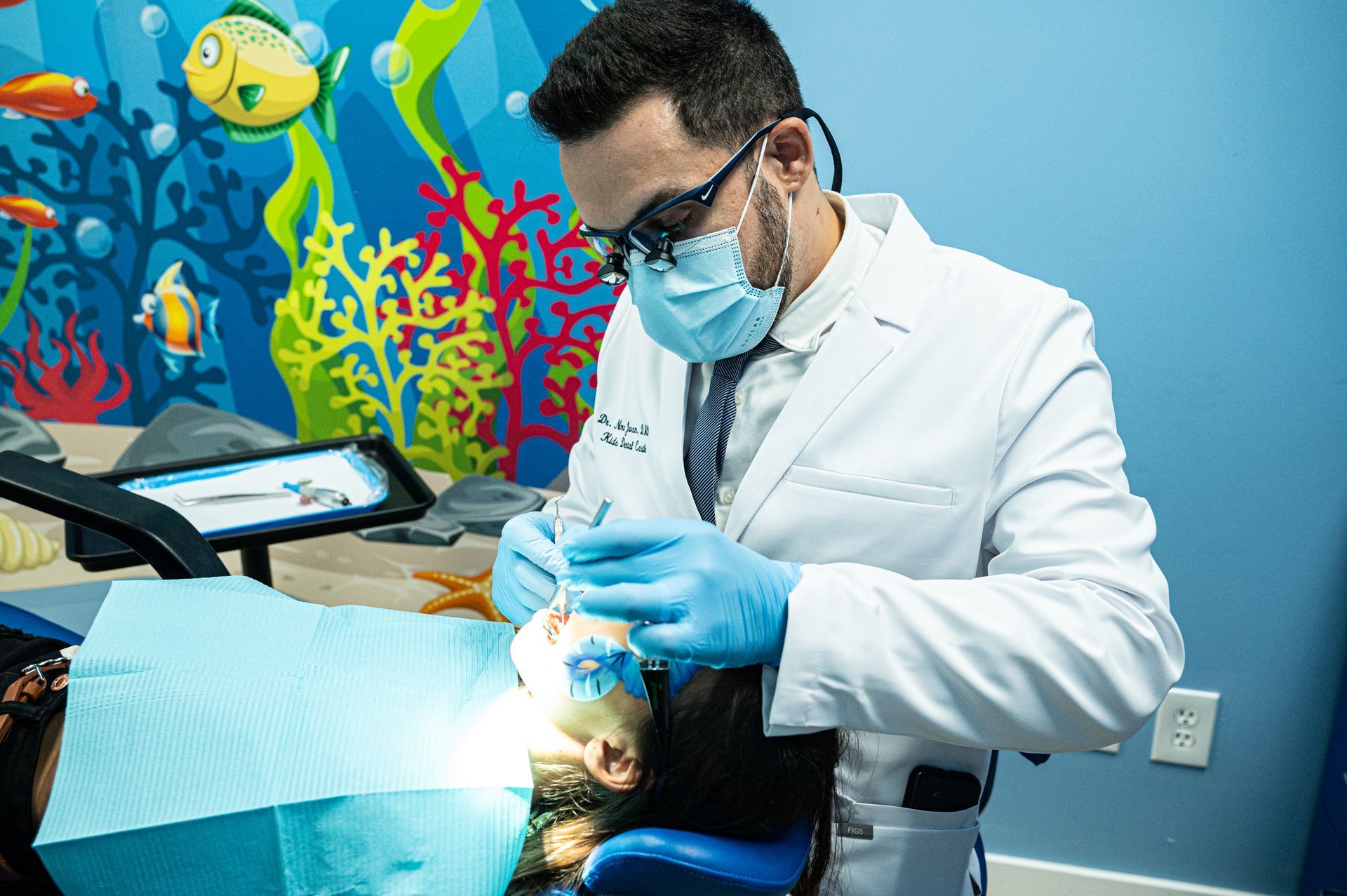
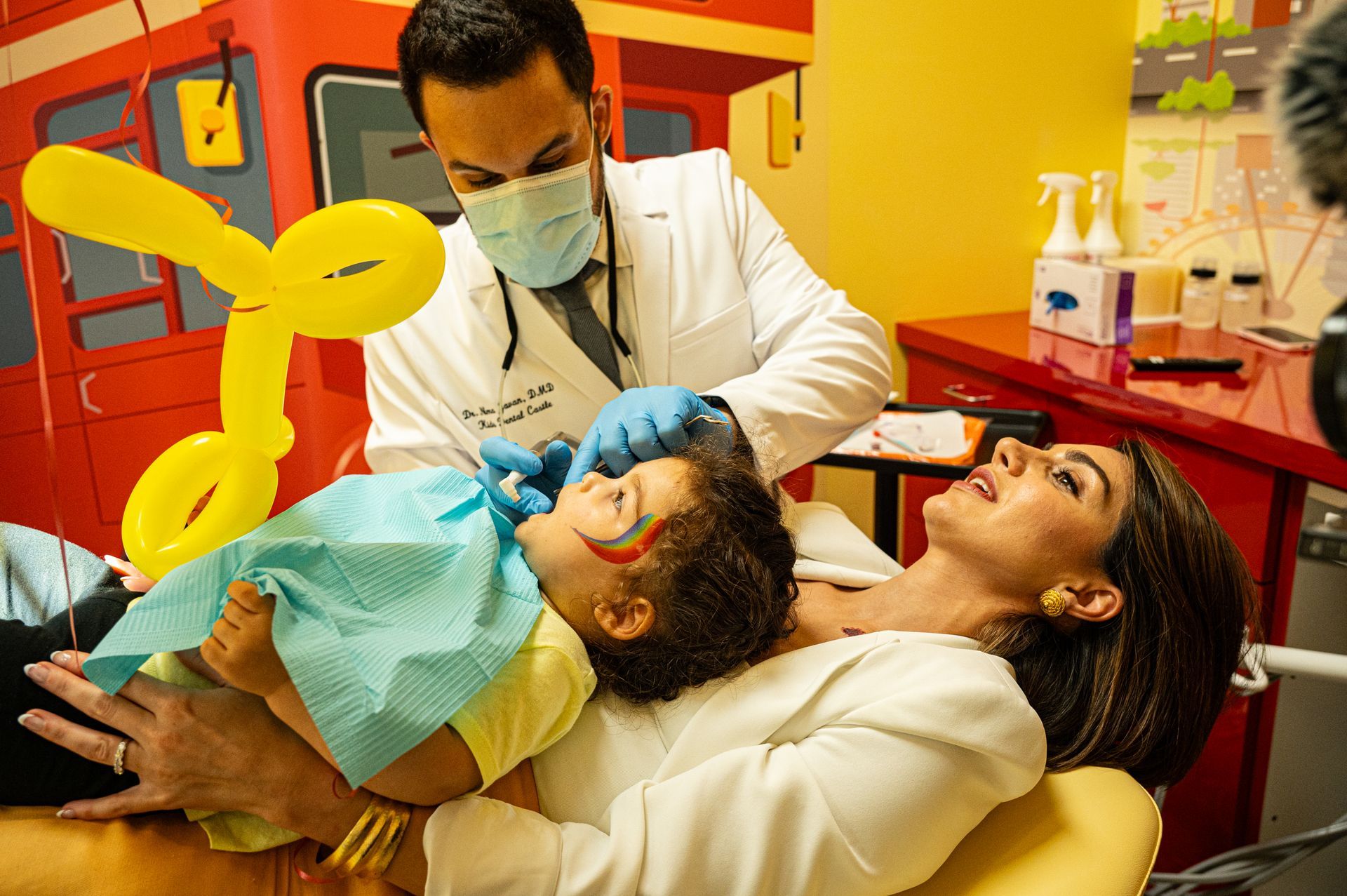
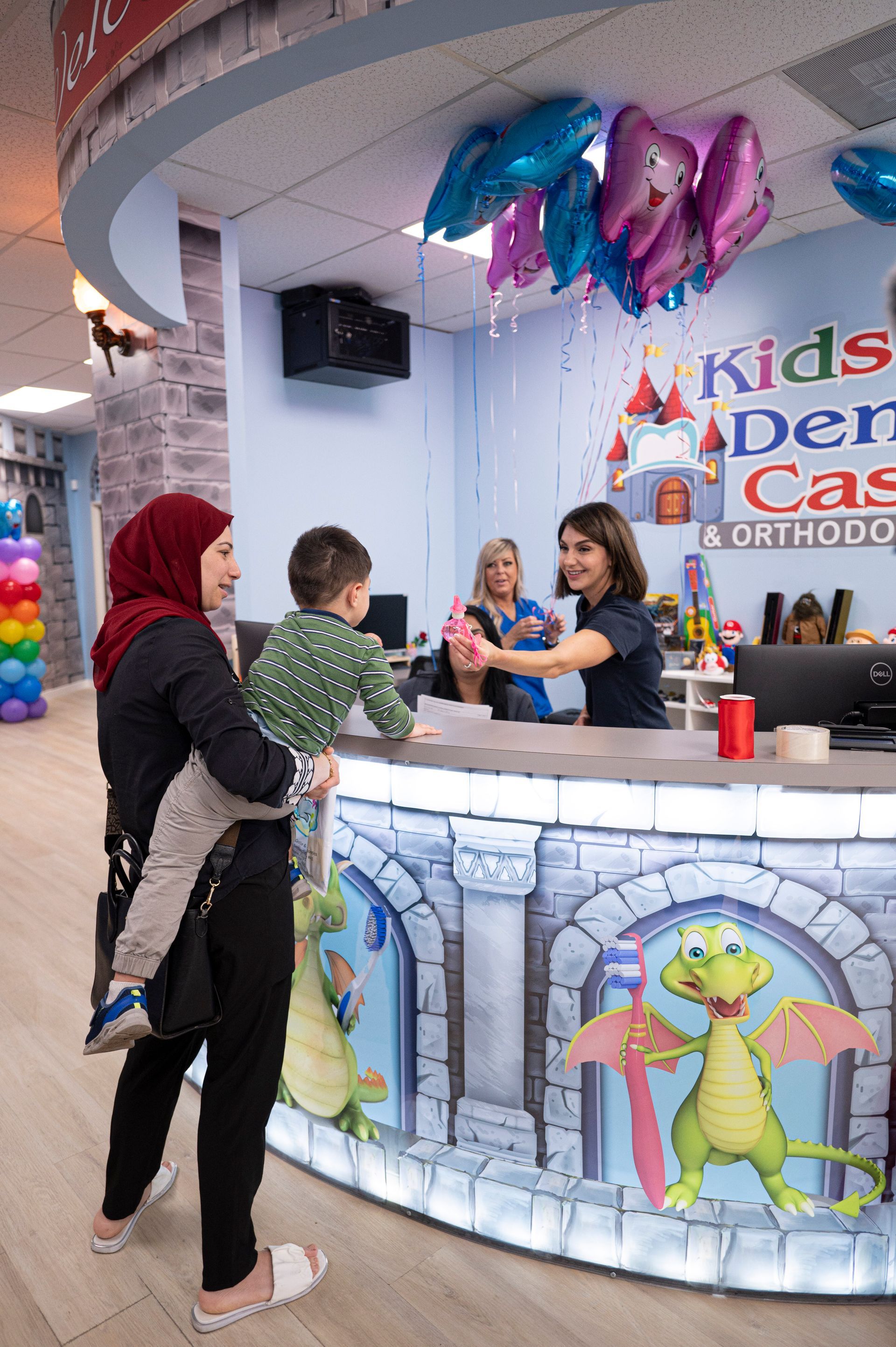
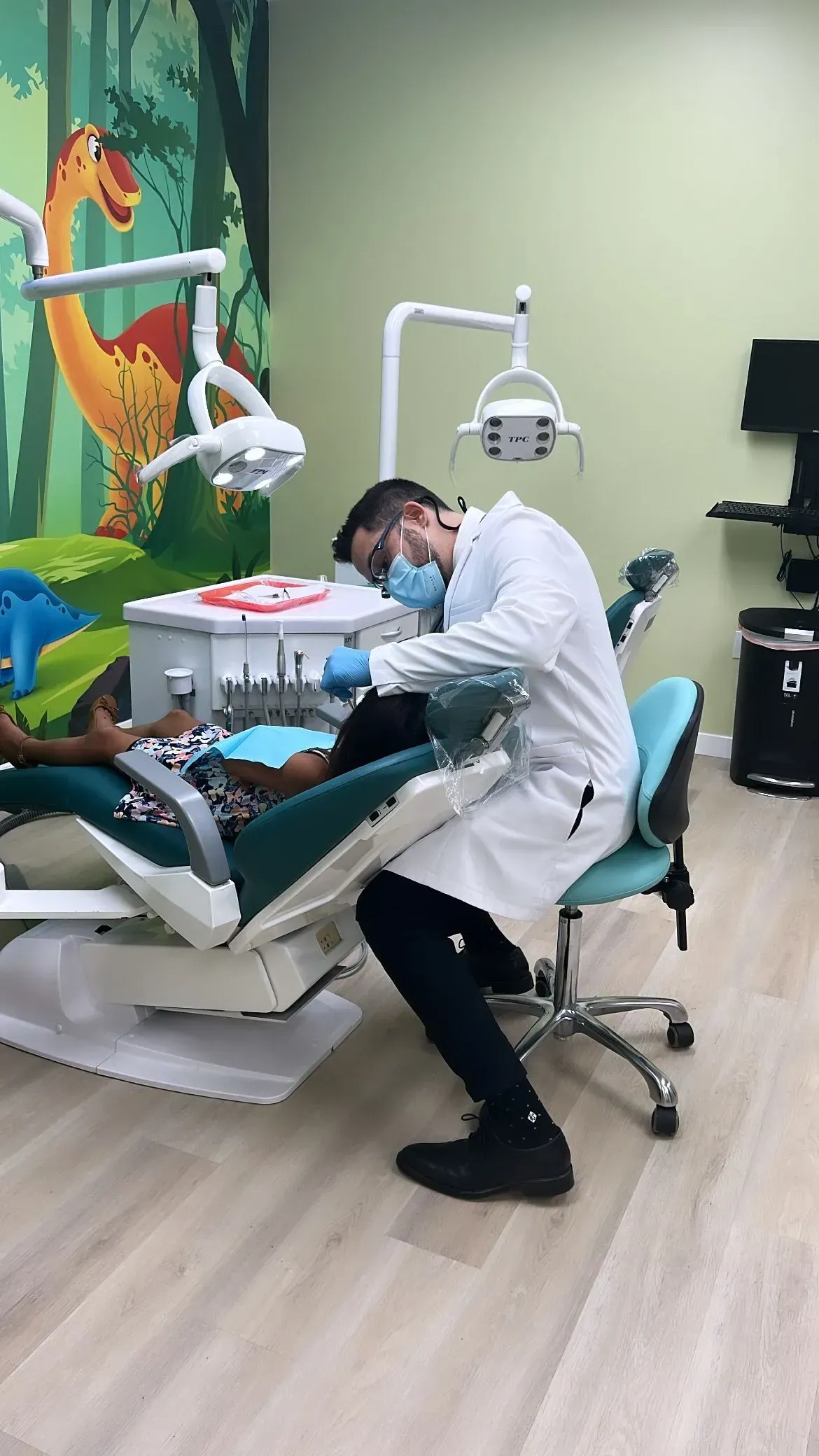
Our office is designed specifically with children in mind. We use distraction and comfort measures such as ceiling-mounted TVs, and our team adjusts the experience to each child’s age, comfort level and individual needs.
Sedation Options When Appropriate
Some children may benefit from additional behavior guidance or sedation for dental treatment.
Depending on the child, the planned procedure and other individual considerations, available options may include nitrous oxide or, when appropriate, deeper sedation/anesthesia with qualified anesthesia providers.
The appropriate approach is determined individually after evaluating your child and the treatment being considered.
Clear Communication With Parents
Before treatment, we explain what is recommended, why it is being recommended, available alternatives when appropriate, and what you can expect afterward.
Parents also receive instructions about recovery and when they should contact the office with concerns.
Why Early Oral Surgery Supports Long-Term Dental Health
Early intervention plays a critical role in maintaining a healthy and functional smile. Addressing dental concerns before they progress helps prevent complications that can affect surrounding teeth, gums, and bone structure. Patients who act early often benefit from simpler procedures, shorter recovery times, and more predictable results. By resolving issues such as impacted teeth or infections early on, long-term damage can be avoided while preserving overall oral health and stability.Signs Your Child Should Be Evaluated
You do not need to know whether your child needs oral surgery before making an appointment. Consider scheduling an evaluation if your child has:
- Persistent or significant tooth pain
- Swelling of the gums, face or jaw
- Drainage or signs of infection around a tooth
- A severely broken or damaged tooth
- A permanent tooth that appears significantly delayed in erupting
- An extra tooth identified on an X-ray
- A tooth that your dentist believes may be impacted
- A dental injury following a fall, sports accident or other trauma
Significant swelling, fever, difficulty swallowing or breathing, or a rapidly worsening dental infection warrants prompt professional evaluation.

Frequently Asked Questions About Pediatric Oral Surgery
Does my child automatically need an oral surgeon if a tooth needs to be extracted?
Not necessarily. The appropriate provider depends on the tooth, the complexity of the procedure, your child’s medical and dental history, behavior and other clinical factors. After an evaluation, the dental team can explain the most appropriate treatment plan.
Are baby tooth extractions considered oral surgery?
A tooth extraction is an oral surgical procedure, but the complexity can vary considerably. Some baby teeth can be removed relatively simply, while other situations require additional planning.
Can children receive sedation for oral surgery?
Yes, sedation or anesthesia may be appropriate for some pediatric patients. The decision depends on factors such as the child’s age, medical history, anxiety or ability to cooperate, the procedure being performed and its expected duration.
Does finding an impacted or extra tooth mean it needs to be removed immediately?
No. Treatment depends on its location, the child's dental development, whether it is interfering with eruption or neighboring structures, and other clinical considerations. Sometimes monitoring is appropriate; in other cases, treatment may be recommended.
How do I know if my child needs oral surgery?
In many cases, you won't know until your child is examined. If your child has persistent pain, swelling, dental trauma, an unusual eruption pattern, or your dentist has identified an impacted or extra tooth, an evaluation can determine the appropriate next step.
Pediatric Oral Surgery for Families from Upland, Pomona, Claremont & Chino
Kids Dental Castle & Orthodontics is located in Pomona, CA, and we welcome families from Upland, Claremont, Chino and surrounding communities.
If something about your child’s teeth has you concerned, an evaluation can help determine whether treatment is needed now, should be planned for later, or simply needs to be monitored.
Have a concern about your child’s teeth?
Call 909-741-7052 or request a consultation online.
This article is for general educational purposes and does not replace an individualized dental evaluation.
For most children and teenagers, the first reason to see an oral surgeon is wisdom teeth. We recommend a first look at 13 or 14, when one panoramic X-ray shows which way the third molars are pointed and whether there is room for them, years before anything hurts. At our office that evaluation is done by Dr. Sean Moghadam, a board-certified oral and maxillofacial surgeon, and removal, when it is needed, is $300 per tooth with in-office sedation available. Read more on our wisdom tooth extraction page.
Related pages: oral surgery near Chino, oral surgery near San Dimas, and oral surgery near Rancho Cucamonga.
Pediatric Dental & Orthodontic Blog in Pomona, CA